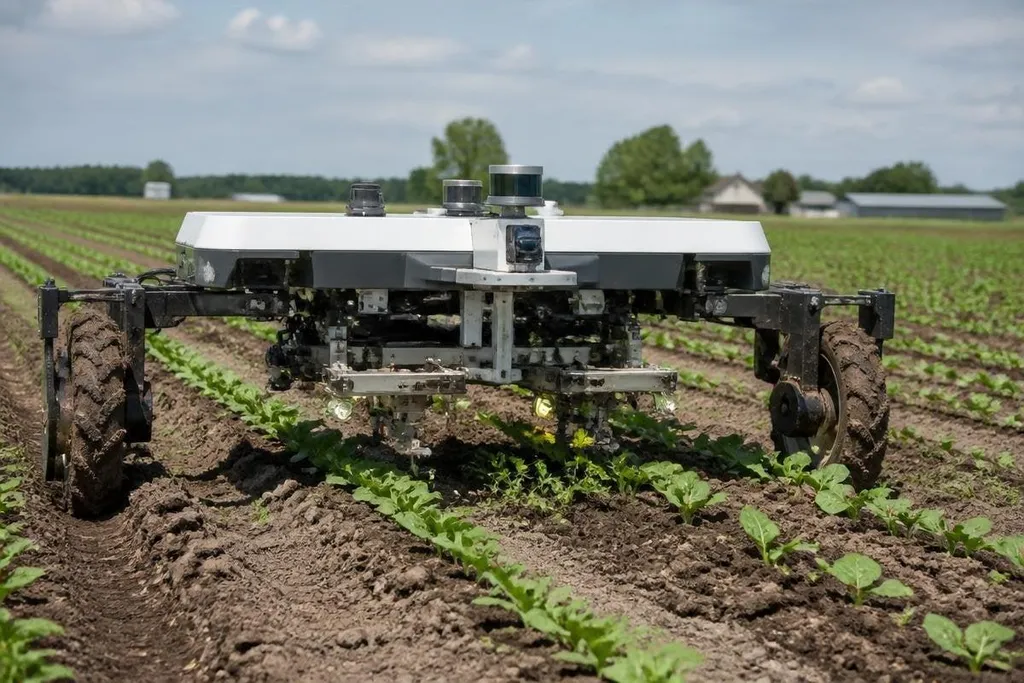
A weeding robot has to tell a crop from a weed, move through uneven ground, and remove the weed without cutting the plant beside it. That sounds like one task, but it joins vision, positioning, motion control, and farm work in a single machine.
- Plant recognition must work with changing light and soil.
- The tool needs to remove weeds close to crop stems.
- A useful robot must keep working after dust, mud, and missed detections.
The hard part is plant-level vision
A camera can find green shapes. That is not enough for a farm robot. Crop rows bend, leaves overlap, soil changes color, and small weeds can sit under a crop canopy.
New machines will need image systems that use plant position, leaf shape, row spacing, and growth stage together. RGB cameras can provide color images, while multispectral cameras can record bands of light that ordinary cameras cannot see.
Each extra sensor adds cost and data, so the system needs a clear reason for using it.
This is where claims need care. A robot may identify a weed in a clean test plot and still miss it after rain, dust, or heavy leaf cover. A useful product needs field results across different crops and soil types, with missed weeds and damaged plants counted separately.
Positioning has to hold in rough ground
A row-following robot needs more than a route on a map. Its wheels can slip, the ground can tilt, and the crop row may curve. The machine has to update its position as it moves.
Real-time kinematic global navigation satellite system positioning, known as RTK-GNSS, can give a robot a precise outdoor position when correction data and satellite signals are available. Cameras, wheel sensors, and inertial sensors can fill gaps when trees, buildings, or terrain block that signal.
That mix matters near the plant. A small position error can move a blade into the crop. The robot also needs a safe response when its sensors disagree: slow down, stop, or leave the row for a later pass. A warning on a screen does not protect a plant.
A camera can mark a weed without removing it. For a grower, a report on Robot24.com can connect the crop, row spacing, tool, and working speed to the field test. Those details show what the robot leaves behind after each pass.
Mechanical removal still decides the result
Vision finds the target. A tool has to remove it.
Electric hoes, rotating brushes, finger weeders, and narrow blades each suit different soil and crop layouts. A brush can disturb weeds near the surface. A blade can cut below the soil, but it needs a controlled depth and a stable path. A spray nozzle can treat one plant at a time, though drift and chemical rules still matter.
The tool should match the crop’s root depth, row width, and growth stage. A system that works around young lettuce may damage a taller crop with wider leaves. This is why a robot needs adjustable tool height, a clear emergency stop, and a way to record missed weeds for later review.
I’d wait to buy until a maker publishes crop damage, missed-weed, operating-speed, and service figures from field work.
What farm operators should check
Before paying for a weeding robot, check the parts that affect daily work:
- Ask for field data that names the crop, soil, area, and test period.
- Check how the robot handles rain, dust, slopes, and blocked satellite signals.
- Confirm the working width, tool depth, battery run time, and charge method.
- Find out who removes stuck weeds, cleans sensors, and changes worn tools.
- Price the full system, including software, correction data, spare parts, and labor.
Those questions connect the machine to the farm’s real schedule. A robot that needs a person beside it for every row may still help with labor, but its cost must include that person’s time.
The next useful proof will come from repeat field runs, not a single clean demonstration. A maker that reports plant damage, missed weeds, machine stops, and cost per acre gives farmers enough detail to decide if the robot belongs in the next planting season.